
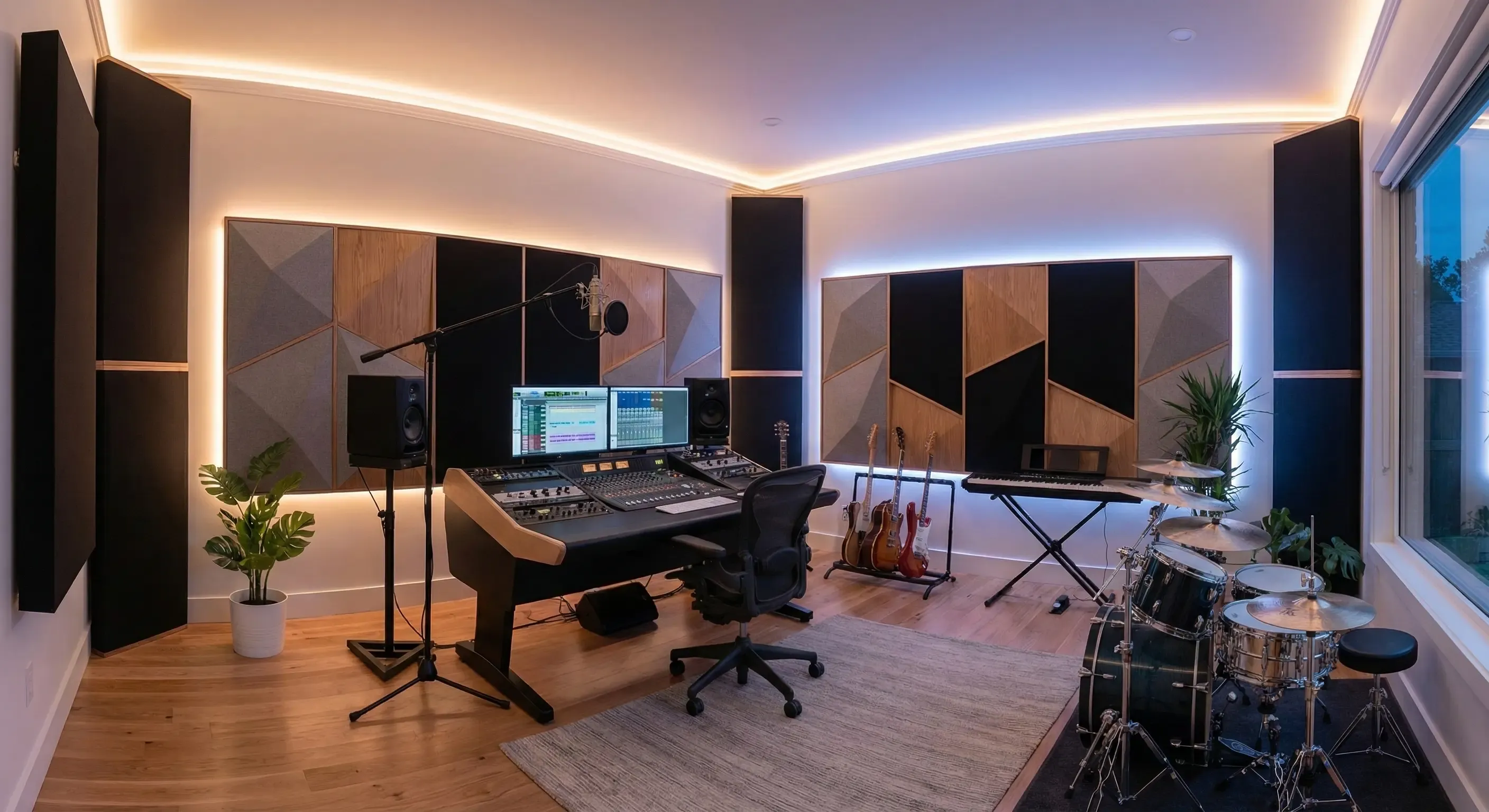
Creating a professional recording studio at home is no longer limited to large budgets or commercial facilities. Modern technology allows musicians, producers, and podcasters to build high quality recording environments inside their homes.
A well designed home studio combines acoustic treatment, smart room layout, proper equipment placement, and sound isolation. When these elements work together, you can record, mix, and produce music with clarity and precision.
This guide explains the essential steps to design a professional recording studio at home, helping you create a space that delivers reliable sound and improves your creative workflow.
Choosing the Right Room for Your Home Studio
The room you choose plays a major role in how your recordings and mixes sound. Many beginners overlook this step and struggle with acoustic issues later.
When selecting a room for your studio, consider the following factors:
• Room shape: Rectangular rooms are easier to treat acoustically than square rooms.• Ceiling height: Higher ceilings reduce unwanted reflections and standing waves.• Noise sources: Avoid rooms near busy streets, appliances, or loud HVAC systems.• Room size: Larger rooms provide better acoustic balance and mixing accuracy.
Smaller rooms can still work well when designed correctly, but they often require more acoustic treatment to control reflections and bass buildup.
Understanding Acoustic Treatment and Sound Control
One of the most important aspects of designing a professional recording studio at home is controlling how sound behaves inside the room. Many people confuse acoustic treatment with soundproofing, but they serve different purposes.
Acoustic treatment improves sound quality inside the room, while soundproofing prevents sound from entering or leaving the room.
Common Acoustic Treatment Solutions
Acoustic treatment typically includes several elements that work together to improve sound clarity.
• Acoustic panels absorb mid and high frequency reflections• Bass traps control low frequency buildup in room corners• Diffusers scatter sound reflections to maintain natural ambience• Ceiling clouds reduce reflections above the listening position
Proper placement of these treatments helps create a balanced listening environment for recording and mixing.
Essential Equipment for a Professional Home Studio
The equipment you choose can significantly impact the quality of your recordings. However, buying expensive gear without proper room design often leads to disappointing results.
Below are the core components of a professional home recording studio.
Equipment | Purpose |
|---|---|
Audio Interface | Converts analog sound into digital signals for recording |
Studio Monitors | Provide accurate sound for mixing and production |
Microphones | Capture vocals, instruments, and sound sources |
Headphones | Allow precise monitoring during recording sessions |
Digital Audio Workstation (DAW) | Software used for recording, editing, and mixing audio |
Acoustic Treatment | Improves sound accuracy inside the room |
Choosing reliable equipment ensures your studio can handle a wide range of recording and production tasks.
Designing the Best Studio Layout
The layout of your studio directly affects monitoring accuracy and workflow efficiency. Poor speaker placement or seating positions can create inaccurate mixes and listening fatigue.
Ideal Listening Position
Your listening position should sit roughly 38 percent of the room length from the front wall. This placement helps reduce standing waves and improves frequency balance.
Studio Monitor Placement
For accurate monitoring, follow these basic guidelines:
• Position monitors at ear level• Form an equilateral triangle between the monitors and listening position• Keep monitors away from walls to reduce bass buildup• Angle the speakers slightly toward the listening position
Proper monitor placement allows you to hear music as accurately as possible when mixing.

Sound Isolation Tips for Home Studios
While acoustic treatment improves sound quality inside the room, sound isolation reduces noise interference from outside sources.
Perfect soundproofing can be expensive, but several practical solutions can reduce unwanted noise.
• Install weather stripping around doors and windows• Use solid core doors instead of hollow doors• Add heavy curtains or soundproof blankets• Seal small air gaps where sound can leak
These steps help prevent outside noise from interfering with recording sessions.
Lighting and Studio Comfort
Comfort and atmosphere can significantly affect productivity in a home recording studio. Long recording or mixing sessions require a workspace that supports focus and creativity.
Consider these elements when designing your studio environment:
• Soft LED lighting reduces eye strain during long sessions• Ergonomic chairs improve comfort and posture• Cable management systems keep equipment organized• Ventilation and airflow maintain a comfortable room temperature
A well organized and comfortable studio encourages creativity and improves workflow.
Common Mistakes When Designing a Home Recording Studio
Many home studio owners make mistakes that reduce sound quality and waste money. Understanding these issues can help you design a more effective studio from the start.
Some common mistakes include:
• Buying expensive equipment before treating the room acoustically• Placing studio monitors directly against walls• Ignoring bass frequencies and corner treatment• Using foam panels incorrectly or covering the entire room• Choosing rooms with poor acoustic shapes
Avoiding these mistakes ensures your studio delivers professional results.
Benefits of a Professionally Designed Home Studio
A properly designed recording studio provides several advantages for musicians, producers, and content creators.
• Accurate monitoring for mixing and mastering• Better recording quality for vocals and instruments• Improved workflow and productivity• Greater creative control over your projects• Long term cost savings compared to renting studio space
Investing time in proper studio design leads to better recordings and more consistent audio production.
Conclusion
Designing a professional recording studio at home requires careful planning and attention to acoustics, layout, and equipment selection. The right room, proper acoustic treatment, and correct monitor placement can dramatically improve recording and mixing quality.
Whether you are a musician, producer, or podcaster, a well designed home studio allows you to create high quality audio without leaving your home. By focusing on sound control, efficient layout, and reliable equipment, you can build a studio environment that supports professional level production.